
Laundry in Bali for digital nomads and expats: a weekly routine that works
When you live in Bali rather than visit, laundry stops being a holiday chore and becomes infrastructure. You wear the same twenty things on rotation, the humidity never lets up, and the scooter coats everything in dust. The fix is not more effort. It is a rhythm you set once and forget.
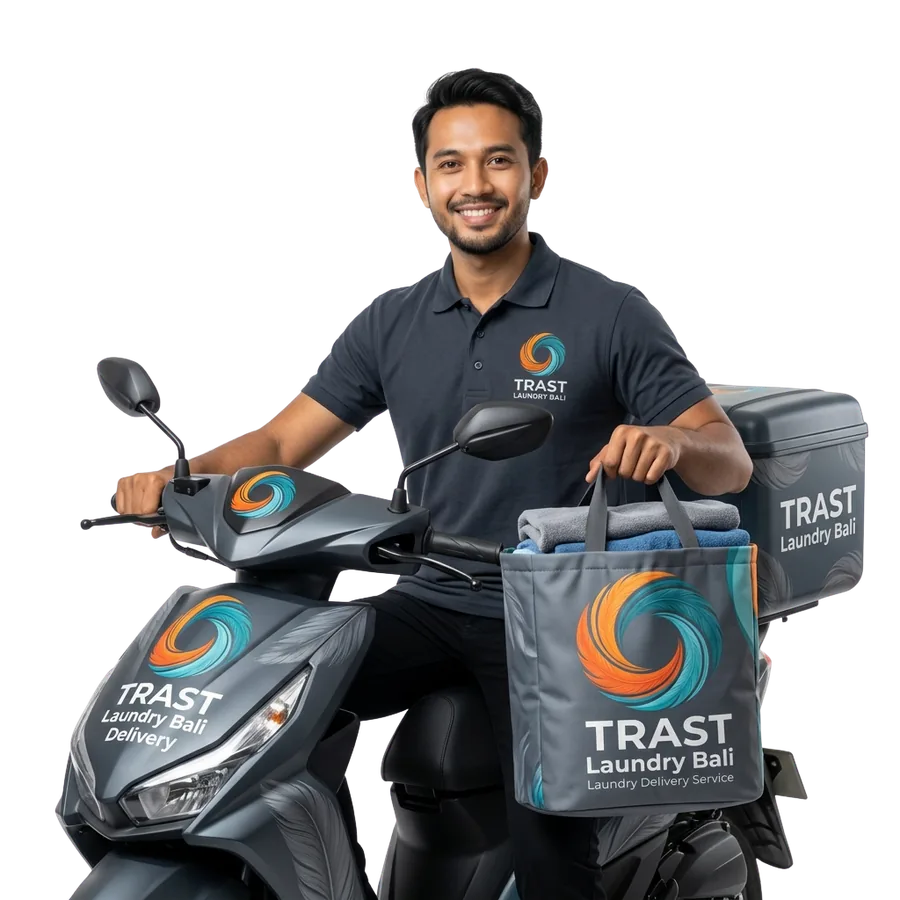
The rhythm: one bag, one day, one message
The whole routine fits in a sentence: everything you wore this week goes in one bag on the same day every week, and a WhatsApp message sends it away. It comes back the next day, ironed and folded, and the bag starts again.
The reason it works is that it removes decisions. No "is there enough for a load", no waiting for the sun, no negotiating with a villa machine that smells of last month. Laundry becomes like the water delivery: it happens on Tuesday.
Pick your day with the week in mind. Monday or Tuesday pickups give you a full wardrobe back by midweek and a clean bag for the weekend. Friday pickups suit people who travel weekends and want everything fresh on their return.
What a week actually weighs and costs
For one person living in Canggu or Ubud, a normal week produces:
- 6–8 t-shirts and tops (about 1.2 kg)
- 3–4 pairs of shorts or light trousers (about 1 kg)
- Underwear and socks (about 0.5 kg)
- Activewear from three or four sessions (about 0.6 kg)
- Two towels (about 1.2 kg)
- A set of sheets every second week (about 1.8 kg when it is that week)
That is 4–5 kg most weeks, 6–7 kg on sheet weeks. At 100,000 IDR per kg a single nomad spends 400,000–700,000 IDR a week for everything washed, ironed and delivered, which is less than most people spend on coffee. Couples sharing one bag land at 7–9 kg. For the full price logic see how much laundry costs in Bali.
Coliving and villa logistics
Coliving. Leave the bag at reception with your name on it. Tell us the coliving and who to ask for in the first message; after that we know the routine. Delivery goes back to the same desk.
Villa with staff. The easiest case: the bag waits at the gate or with the housekeeper, and delivery is handed to whoever is there. You do not need to be home.
Villa without staff. Leave the bag outside the door at the agreed time or in a box by the gate. For delivery we message before arriving so you can leave a spot where it is safe from rain.
Apartment or guesthouse. Reception or your door, your choice. Send the location pin once; we save it.
Our pickup and delivery page covers the details, but in practice the only thing we need is a pin and a time window.
Keeping a small wardrobe alive for a year
Nomads wear the same twenty items far more often than a holiday wardrobe. Each garment might be washed fifty times a year. Small differences in how it is washed become huge over that many cycles.
Linen. The best fabric for Bali and the one most laundries ruin. Hot washes and hot dryers make it stiff, shrink it, and fade the colour. Washed warm, dried without extreme heat and steam ironed, linen gets softer for years. This is the single biggest reason people switch to a laundry that sorts by fabric.
Activewear. Elastic dies from heat, not from use. Gym clothes washed cool and dried in the air last three times as long as the same clothes hot-dried. Sweat smell comes from bacteria in the fibres; proper rinsing and complete drying beat any "sport" detergent.
Whites. Whites survive only if they are washed with whites. One dark item in the load, one week, and the t-shirt is grey. Our stain removal process also matters here: sunscreen on a collar, treated cool before washing, comes out; put through a hot wash it becomes an orange mark for life.
Swimwear. Rinse in fresh water after every swim, then it can wait for the weekly bag. Chlorine, salt and sun are what kill it, not the wash.
Jeans and heavy cotton. Wash less. Every second or third week is fine in Bali if they are aired.
The scooter problem
If you ride, your clothes are coated daily in fine red-brown dust that is really iron-rich clay. It settles on collars, cuffs, the back of shirts and the front of trousers, and it stains rather than rinses. Over a year it turns light clothes beige.
Two habits fix it. Shake and brush riding clothes before they go in the bag, and use a laundry that treats stains before the wash rather than noticing them after. The Bali stains guide has the specifics for dust and mud.
Towels and sheets on a schedule
Towels weekly, sheets every one to two weeks, and never store either slightly damp. In a villa without a dryer this is the hardest part of the routine, because a thick towel takes a day and a half to dry on a rail and smells before it gets there. Sending towels and sheets out with the weekly bag is the simplest solution; see bed linen and towels for how they should be washed and dried.
Checklist for a nomad laundry routine
- One bag, one fixed day, one WhatsApp message.
- Location pin and reception details sent once.
- Riding clothes shaken before bagging.
- Swimwear rinsed after each swim.
- Towels every week, sheets every one to two.
- Nothing put away damp.
- A laundry that sorts by fabric, dries properly and keeps orders separate.
Set it up once, and the next fifty weeks take care of themselves.
Read next: how much laundry costs in Bali in 2026 and why laundry smells musty in Bali.