
Bali stains: sunscreen, sand, coconut oil, red dust, mould. What comes out and what doesn't
Bali produces a specific set of stains that the care label never anticipated: reef-safe sunscreen that turns collars orange, coconut oil from a massage, the red dust of every road north of Canggu, and mould that appears overnight. Here is what to do with each one, in the order that actually helps.
The two rules that matter more than any stain
Rule one: no heat until the stain is gone. Hot water, a hot dryer and an iron all set stains permanently. A stain that is still there after a cool wash can usually still be treated. The same stain after a hot dryer is a tattoo.
Rule two: blot, do not rub. Rubbing pushes the stain deeper and spreads it. Press with a clean cloth from the outside of the stain inward.
Everything below is a variation on those two rules.
Sunscreen
The most common Bali stain by far. Orange or yellow marks on collars, straps, the back of white shirts and the waistband of shorts. The culprit is usually avobenzone reacting with iron in water and heat; mineral sunscreens leave a greasy white film instead.
First ten minutes: blot off any excess with a tissue. Work a drop of dish soap into the mark with cool water. Leave it.
Then: wash cool or warm, never hot, with no chlorine bleach (bleach turns these marks darker). Check before drying. If it is still there, repeat. Do not iron over it.
Prognosis: excellent if caught before heat. Old orange marks that have been through several hot washes are usually permanent. This is why a laundry that sorts and pre-treats before washing matters more for sunscreen than for any other stain.
Coconut oil and massage oil
Bali runs on coconut oil: massages, hair, cooking, skin. It leaves a dark translucent patch that looks worse once dry.
First ten minutes: blot. Cover the patch with dish soap or a dab of shampoo (both are designed to break oil) and let it sit for 15 minutes.
Then: wash warm. Check while damp; oil stains are invisible wet and reappear dry, so hold it up to the light before drying.
Prognosis: very good if no heat has touched it. Heat-set oil is one of the stains we most often have to refuse.
Red road dust and mud
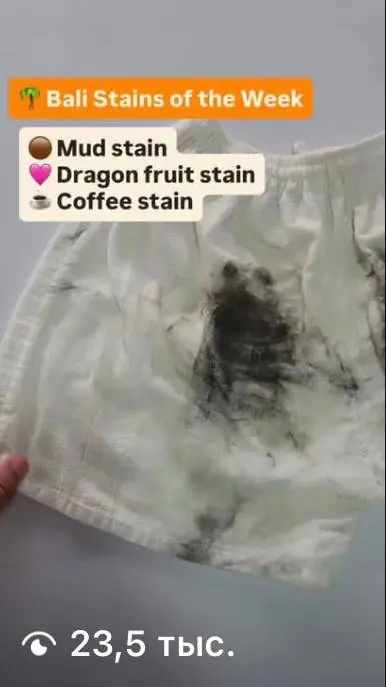
The red-brown dust of Pererenan, Umalas and every scooter road is iron-rich clay. It does not wash out like ordinary dirt; it stains.
First ten minutes: let mud dry completely, then brush or shake it off outdoors. Wet mud spreads.
Then: rinse from the back of the fabric under cold water to push particles out, not in. Wash with a normal detergent. For white fabric, a second wash may be needed.
Prognosis: good on cotton and synthetics. Light linen and canvas shoes are harder; see how to keep sneakers white in Bali.
Sand
Sand is not a stain, but it becomes one when it grinds into wet fabric in a washing machine. It also wrecks machines.
Before washing: shake and beat every item outdoors, then brush seams and pockets. A rinse in a bucket removes what shaking cannot. Only then wash.
Sweat and deodorant
Yellow underarm marks are sweat plus aluminium from deodorant; grey stiff patches are deodorant build-up.
First ten minutes: nothing urgent, but do not let it go through a hot cycle repeatedly.
Then: soak in cool water with a spoon of dish soap and a splash of vinegar for an hour, then wash warm. For stubborn build-up, a paste of baking soda worked into the area before washing helps.
Prognosis: good on fresh marks. Years-old yellow on white cotton is usually permanent because the fibre itself has changed.
Mould and mildew
Grey, black or green spots on clothes stored damp or left in a bag after the beach. In Bali they can appear overnight.
First ten minutes: take the item outdoors and brush off the surface spores so you do not spread them indoors.
Then: soak in cool water with a cup of white vinegar for an hour. Wash warm with normal detergent. Dry in direct sun; ultraviolet light kills what the wash missed.
Prognosis: fresh surface mould on cotton and linen comes out. Mould that has fed on the fibres for weeks leaves a grey shadow that is permanent, and on silk or viscose it often causes holes. Read why laundry smells musty in Bali to stop it happening again.
Coffee, sambal and food
Coffee is tannin: cold rinse from the back, then dish soap, then warm wash. Sambal and curry are oil plus chilli pigment: dish soap first for the oil, then sun for the colour. Chilli and turmeric marks often look permanent after washing and fade to nothing after a few hours in direct sunlight, so dry them in the sun before giving up.
Ink, dye transfer and rust
A pen through the wash is the classic. Dab with rubbing alcohol from the back onto a tissue underneath; repeat with a fresh area of tissue until no more ink transfers. Dye transfer (the pink white shirt) comes out of cotton with a colour-run remover if treated before heat, and almost never out of white synthetics. Rust from a wet metal hanger or a zip responds to lemon juice and salt in the sun; never chlorine bleach, which makes rust darker.
What we can and cannot do
At TRAST every item is inspected before washing, and stains are treated before the main wash, not discovered afterwards. Treatment is included in the standard price and covered by a guarantee: if a stain does not come out, that item is free. We use organic products with no chlorine or optical brighteners, which matters for stains because bleach sets sunscreen and rust and yellows the fabric around them.
We will also tell you honestly, before starting, when a stain is set beyond saving: heat-set oil, old dye transfer on synthetics, mould shadows on light fabrics. Send a photo in WhatsApp and you will get a straight answer.
The short list to keep on your phone
- Sunscreen and oil: dish soap, cool, no heat until gone.
- Dust and mud: dry, brush, rinse from the back.
- Sand: shake outdoors before anything goes near water.
- Sweat: vinegar soak, warm wash.
- Mould: vinegar soak, wash, direct sun.
- Everything: blot, never rub, never dry until you have checked.
Read next: why laundry smells musty in Bali and how to fix it and how to keep sneakers white in Bali.